There’s a secret in every flame.
At The Chula Trails, that secret bridges continents — where the ancient wok meets the village chula, and a story of migration, flavor, and belonging begins anew.
This isn’t “fusion.”
It’s conversation — between smoke and spice, between soy and kokum, between two culinary worlds that found a shared heartbeat in Karjat.
—
When Two Fires Met
Most people know Indo-Chinese cuisine as the street food that defined India’s urban appetite — spicy, quick, unapologetic.
But The Chula Trails dared to slow it down.
Here, Chef Nayna Kuwalekar, the architect of the restaurant’s philosophy, asked a radical question:
> “What if we brought the Chinese wok to the village hearth — not to modernize the village, but to teach the wok to breathe like the soil?”
And that’s how it began — a meeting of two flames.
The fast and fierce heat of the wok, tempered by the slow, meditative burn of the chula.
—
Redefining “Fusion”
In most kitchens, fusion means mixing ingredients.
At The Chula Trails, it means mixing intentions.
The Chinese sauces here aren’t industrial; they’re brewed in-house, infused with kokum, tamarind, and goda masala.
The vegetables aren’t tossed at speed — they’re smoked, rested, and remembered.
Even the classic Chili Paneer undergoes rebirth: the paneer is marinated in turmeric and jaggery before it meets the wok.
The result is flavor that’s not shouting; it’s singing in two languages.
—
The Soul Behind the Spice
In the heart of this narrative stands Nayna Kuwalekar — not as a chef stirring ladles, but as the cultural conductor of taste.
She often says,
> “Cooking isn’t about making things new. It’s about helping them remember where they came from.”
So when she conceptualized the Chula Chinese section, her goal wasn’t to reinvent—it was to reconcile.
To let flavors from faraway lands find home in the warmth of Maharashtrian hospitality.
Every sauce, every sizzle was reimagined through that lens: how would a Karjat grandmother interpret soy? How would she stir a wok if she’d only ever known a chula?
That question turned into architecture, rhythm, and ritual.
—
The Design of Dialogue
Even the kitchen at The Chula Trails was designed for conversation.
Nayna ensured that the Chinese woks and traditional chulas share the same fireline—a symbolic merging of speed and stillness.
The layout encourages curiosity.
Guests see the flames leap from both—one bright and blue, the other deep and orange.
It’s as if the two fires are performing a duet, guided by the same ancestral rhythm.
When the first schezwan rice hits the clay bowl, the aroma tells you — this is not fusion; this is friendship.
—
The Staff Who Carry Two Worlds
Under Nayna’s mentorship, every staff member learns not just recipes, but stories.
They’re taught that the Chinese immigrant community in India—especially in Mumbai and Kolkata—shaped the way we think of flavor itself.
One young steward recalls,
> “Ma’am made us understand that Chinese food in India is not foreign—it’s adopted, like family. So when we serve it, we serve gratitude.”
That emotional grounding has turned the service into ritual.
The plating, the smile, the timing — all reflect balance, a kind of quiet choreography born from respect.
—
Karjat Meets Canton
The ingredients may have passports, but the heart of every dish beats local.
Chili peppers grown in Karjat’s red soil meet Canton-style garlic.
Rice from nearby paddies pairs with bamboo shoots and jaggery glaze.
Even the steam has a signature — smoky, fragrant, slow.
When the Chula Noodles arrive at your table, they don’t feel foreign.
They feel remembered — as if this was always meant to be India’s food, just waiting for the right storyteller.
—
The Aesthetic of Belonging
Step into The Chula Trails at dusk, and you’ll notice something extraordinary:
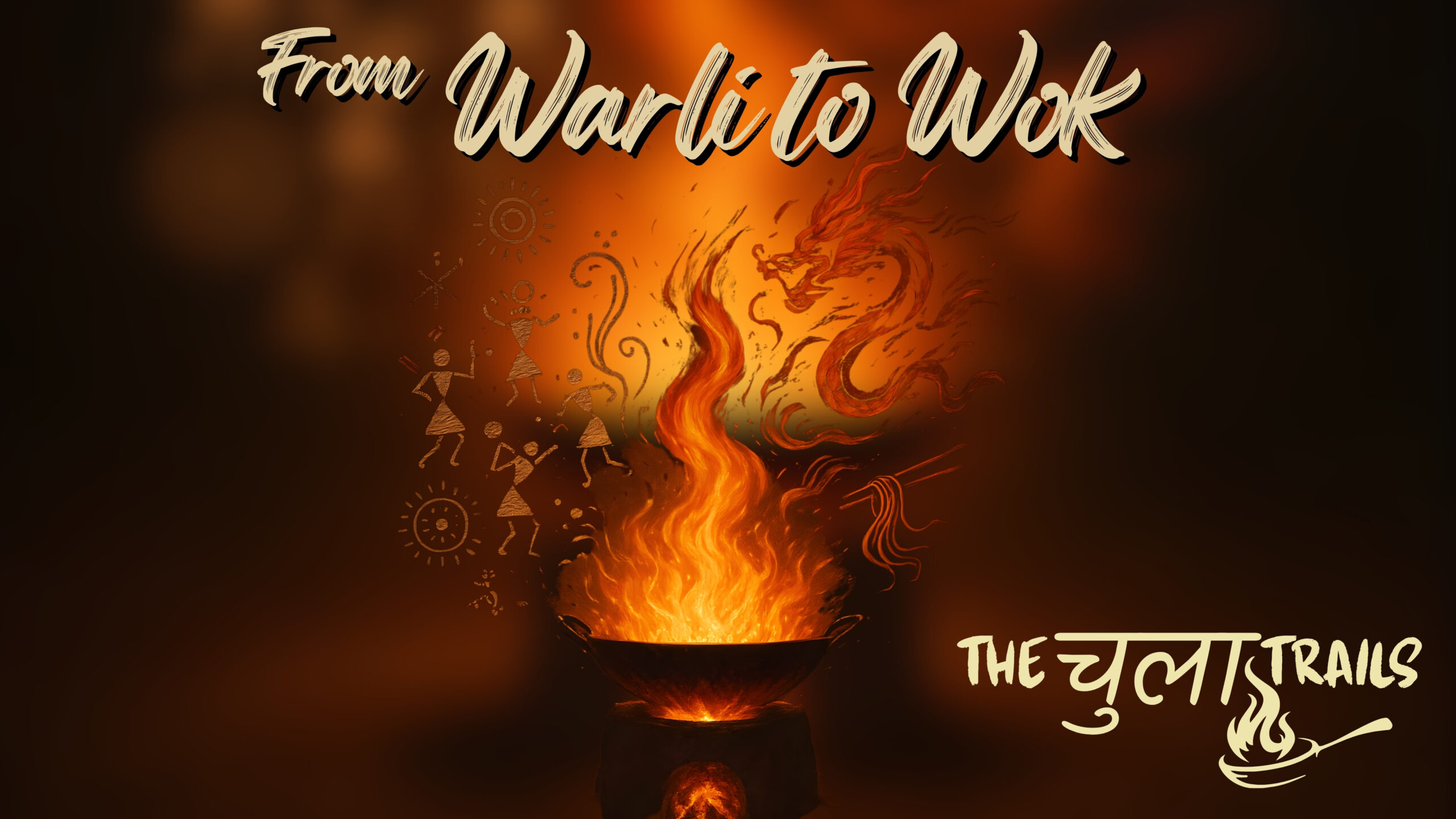
Wok flames flicker against Warli art, painted by local artisans trained under Nayna’s community program.
The contrast is poetic — red lacquer bowls against mud walls, Chinese lanterns beside bamboo fences.
Yet nothing feels forced.
Every corner whispers the same truth: cultures don’t collide when you approach them with reverence.
That’s Nayna’s touch — subtle, spiritual, architectural.
—
Beyond Cuisine: A Cultural Philosophy
For Nayna, Chula Chinese isn’t just a menu—it’s an idea.
An idea that the world’s most authentic food isn’t found by drawing borders, but by dissolving them.
She calls it “The Fire of Friendship.”
A principle she imparts during every staff session, every guest interaction.
> “Food,” she says, “isn’t global or local—it’s emotional. It becomes yours the moment you give it heart.”
That belief radiates through the team, through the space, through every guest who leaves with smoke-scented memories and a smile.
—
A Taste That Travels Back Home
As night deepens, and the last plates are cleared, the two fires—chula and wok—glow side by side.
Different origins, one essence.
They burn like two old souls who finally recognize each other after centuries of wandering.
And in that quiet moment, as embers breathe, you understand what The Chula Trails really is:
A place where cultures don’t mix — they melt into memory.
Where food becomes the language of belonging.
Where Nayna Kuwalekar’s vision continues to turn every flame into friendship.